



Every successful SEO strategy starts with choosing the right keywords. Even if you create high-quality content, it may not reach your audience without proper keyword research. Finding the right keywords helps search engines understand your content and connect it with users searching for related information.
Whether you’re a beginner, blogger, content writer, business owner, or digital marketer, learning how to find keywords is one of the most valuable SEO skills. In this guide, you’ll learn the complete keyword research process, discover free keyword research tools, understand search intent, and build an effective keyword strategy.
Step-by-Step Guide to Finding Keywords

Step 1: Understand Your Niche
Start by identifying your business, website, or blog topic.
Ask yourself:
- What do I offer?
- Who is my audience?
- What problems do they face?
- What solutions can I provide?
Example
A digital marketing agency may focus on:
- SEO
- Content Marketing
- Social Media Marketing
- Google Ads
These become the starting point for keyword research.
Step 2: Brainstorm Seed Keywords
Seed keywords are broad terms that describe your products, services, or content topics.
For a Dance school:
- Dancing school
- Dance training
- Dance institute
- Dance Academy
- Dance class
Based on the services client provide additional seed keyword can be
- Classical dance
- Bharatanatyam classes
- Mohiniyattam trainings
These keywords help generate hundreds of related keyword ideas using research tools.
Step 3: Use Google Search Suggestions
Google SERP features like “People Also Ask,” autocomplete, and related searches reveal the exact questions and search intent of your target audience. Analysing these real-time search elements helps you easily discover high-value, long-tail keyword ideas that standard research tools often miss.
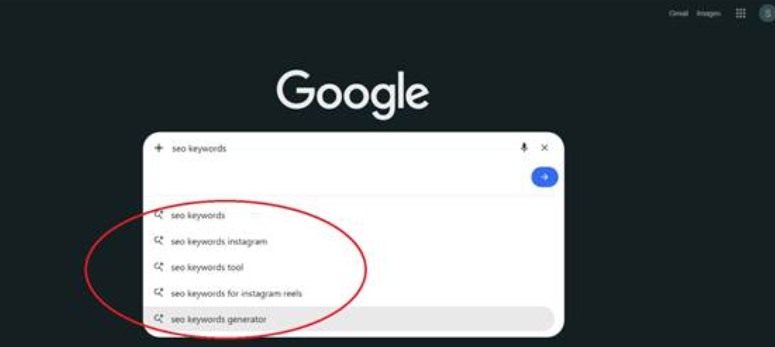
Google Autocomplete
Start typing your topic into Google.
Example:
SEO keyword…
Google may suggest:
- SEO keyword research
- SEO keyword analysis
- SEO keyword strategy
- SEO keyword planner
People Also Ask
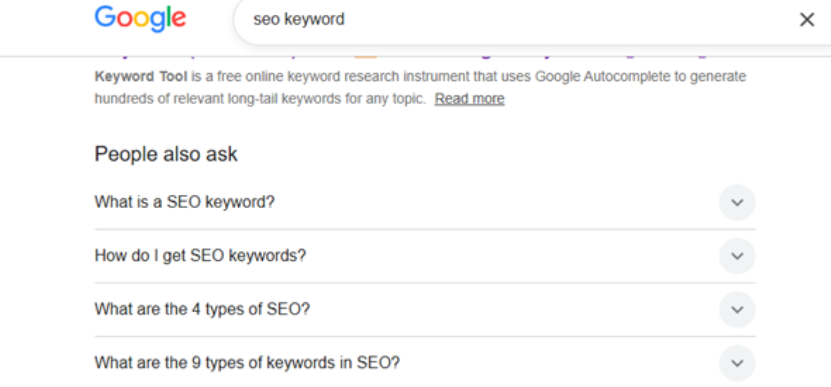
This section reveals common user questions.
Examples:
- What is keyword research?
- How do beginners find keywords?
- Which keyword tool is free?
People Also Searches
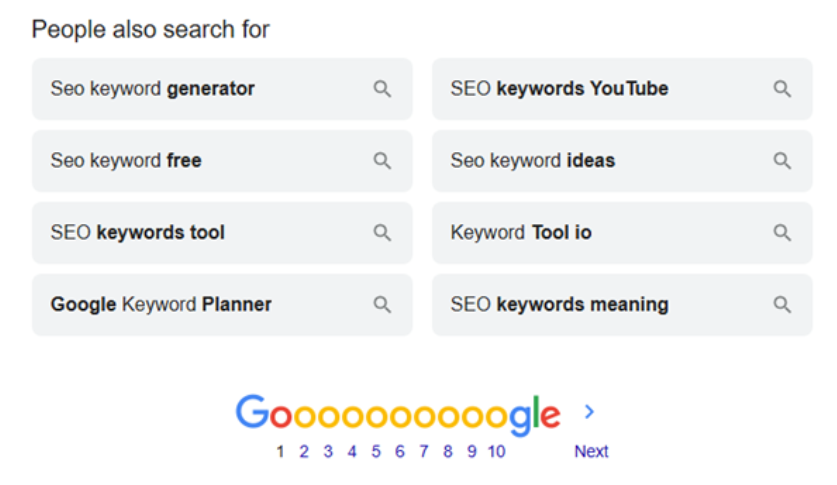
Scroll to the bottom of Google’s search results to discover more keyword ideas.
These suggestions come directly from real user searches.
Step 4: Use Free Keyword Research Tools
Free keyword research tools help you discover what people are searching for, how popular a keyword is, and how difficult it may be to rank for. These tools provide valuable insights that allow you to choose keywords with the best potential for driving organic traffic. If you’re new to SEO, start with free tools before investing in paid platforms.
The best approach is to use more than one tool because each offers unique data and features. Combining insights from multiple tools gives you a more complete keyword strategy.
Several free tools make keyword research easier.
| Tool | Best For | Free Version |
| Google Keyword Planner | Search volume | Yes |
| Google Trends | Trending topics | Yes |
| Uber suggest | Beginner SEO | Limited |
| Keyword Surfer | Chrome extension | Yes |
| Answer the Public | Content ideas | Limited |
Google Keyword Planner
Provides keyword ideas, monthly search volume, and related keywords directly from Google.
Best for:
- Finding keyword ideas
- Checking monthly search volume
- Discovering related keywords
Learn how to use keyword planner for keyword research
Google Trends
Shows how keyword popularity changes over time and helps identify seasonal trends.
- Finding trending topics
- Comparing keyword popularity
- Identifying seasonal search trends
Uber suggests
Offers keyword suggestions, SEO difficulty, and basic competitor insights for beginners.
- Keyword suggestions
- SEO difficulty analysis
- Basic competitor research
Keyword Surfer
Displays search volume and related keywords directly in Google search results.
- Quick keyword research
- Related keyword ideas
- Instant SEO insights while browsing Google
Answer the Public
Generates question-based keyword ideas to help create engaging and informative content.
- Finding question-based keywords
- Generating blog topic ideas
- Creating FAQ sections
Use multiple tools to gather more keyword ideas instead of relying on just one source.
Step 5: Analyse Search Intent
Search intent explains why someone searches for a keyword.
There are four main types.
Informational Intent
The user wants information.
Example:
- What is SEO?
- How to find keywords
Commercial Intent
Research Before Buying Products.
Example:
- Best SEO tools
- Ahrefs vs Semrush
Transactional Intent
The user is ready to buy.
Example:
- Buy SEO course
- Hire SEO expert
Navigational Intent
The user wants a specific website.
Example:
- Google Search Console
- Semrush login
Matching your content to search intent improves rankings and user satisfaction.
Local Intent
Find Nearby Local Businesses
Example:
- Finding Local Services
- Location-Based Searches
Step 6: Find Long-Tail Keywords
Long-tail keywords contain three or more words and target specific searches.
Examples:
- how to find keywords for SEO
- free keyword research tools
- keyword research for beginners
Benefits
- Lower competition
- Higher conversion rates
- Better ranking opportunities
- More targeted traffic
Instead of targeting SEO, target SEO keyword research guide for beginners.
Step 7: Analyse Competitors
Your competitors can reveal valuable keyword opportunities.
Look at:
- Which keywords they rank for
- Their highest-performing pages
- Frequently asked questions
- Missing topics on your website
Tools like Semrush and Ahrefs simplify competitor analysis, while manual Google searches can also provide useful insights.
Step 8: Group Similar Keywords
Instead of writing one page for every keyword, group related keywords into a single topic.
Example:
Primary Keyword
How to find keywords
Supporting Keywords
- keyword research guide
- SEO keyword research
- keyword analysis
This approach creates comprehensive content and strengthens topical authority.
Step 9: Create Your Content Strategy
Now use your keywords across different types of content.
| Content Type | Keyword Example |
| Blog | How to Find Keywords |
| Landing Page | SEO Services |
| Product Page | SEO Course |
| FAQ | What is Keyword Research? |
Organize your keywords with a content calendar to publish consistently.
Common Keyword Research Mistakes
Avoid these common mistakes:
- Choosing only high-volume keywords
- Ignoring search intent
- Not checking keyword competition
- Ignoring long-tail keywords
- Skipping competitor research
- Failing to update keyword research regularly
A balanced keyword strategy delivers better long-term SEO results.
Conclusion
Keyword research is the foundation of every successful SEO strategy. By understanding your audience, identifying the right keywords, analysing search intent, and using reliable research tools, you can create content that attracts the right visitors and performs well in search results.
Remember that SEO is an ongoing process. Monitor your keyword performance, update your strategy regularly, and continue creating valuable content. Over time, consistent keyword research will help improve your rankings, increase organic traffic, and grow your online presence.
About the Author
Author: Thushara Girish
(Participant: Certified Specialist in Digital Marketing with AI Adoption)
SEO Specialist | Digital Marketing Professional | Content Creator
Thushara Girish is a Digital Marketing professional passionate about SEO, content marketing, AI-driven search strategies, website optimization, and digital marketing. Enjoys creating informative, engaging, and easy-to-understand content that helps readers learn, solve problems, and make informed decisions. Continuously expanding expertise in SEO, keyword research, content writing, WordPress, and AI-powered marketing, with a focus on creating user-friendly, search-engine-optimized content that drives organic growth.
THUSHARA GIRISH LinkedIn: https://www.linkedin.com/in/thushara-girish-dm